
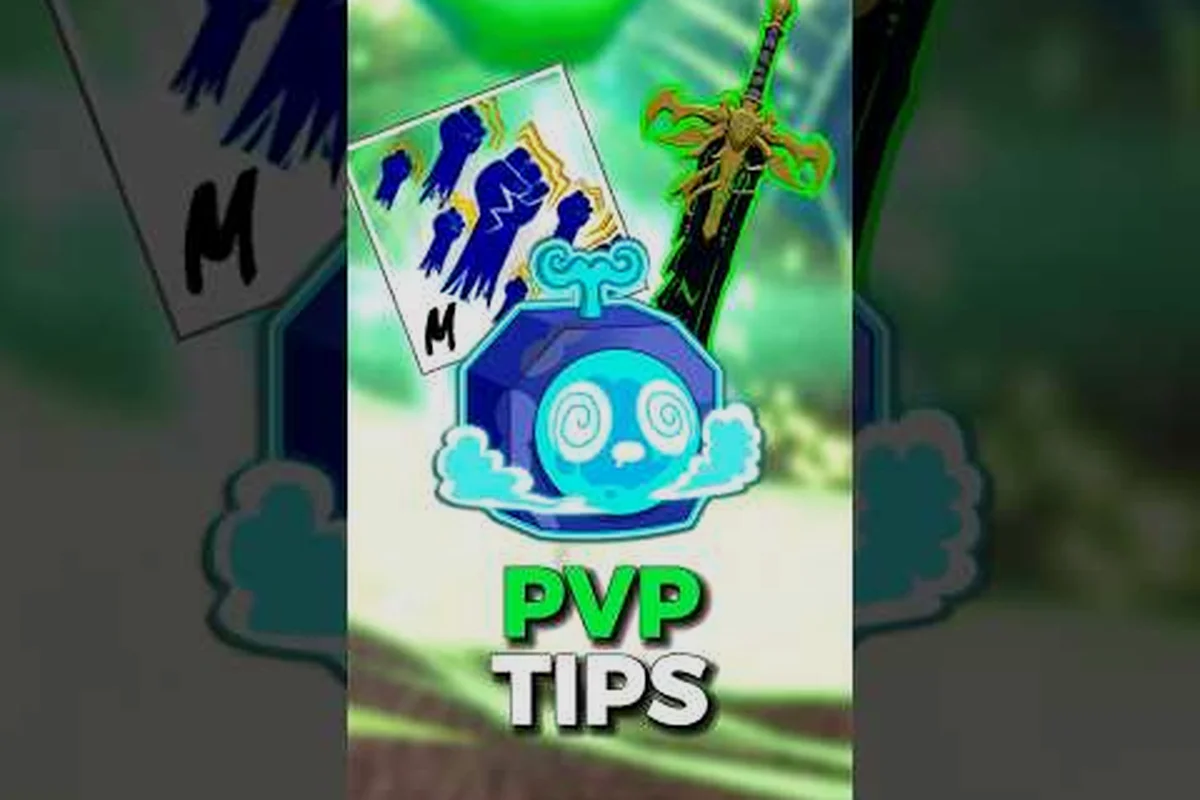
Blox Fruits PvP rewards positioning, timing, and smart combo planning more than raw damage. Observation Haki can expose an opponent’s identity and location before you commit, while Fruit and Gun combo routes create burst windows that leave little time for a counterattack. Mobility skills such as Ice’s F awakening or Shadow’s dash help control spacing, avoid incoming combos, and protect your health. Managing bounty also matters: disrupting a high-value target or collecting its bounty can reshape the match before the next exchange begins.
PvP Fundamentals and Match Setup
The strongest Blox Fruits PvP approach begins before the first hit. Every attack creates an opening, but a poorly timed combo can leave you exposed to the opponent’s counter. Instead of chasing damage alone, focus on three goals: control the space, punish movement, and finish with the least possible commitment.
This Blox Fruits PvP guide uses the mechanics described in community breakdowns such as this player-focused PvP video, where reliable crowd control and mobility are presented as more valuable than impressive numbers on a skill sheet. The same principle applies to every fight, whether you are using a sword, a pistol, or a Logia-style fruit.
| PvP priority | Purpose | Practical result |
|---|---|---|
| Space control | Limit safe escape routes | Opponent has fewer options after a stun |
| Awareness | Track opponent cooldowns | You attack during vulnerable windows |
| Burst timing | Combine damage with control | A short combo becomes harder to escape |
| Escape option | Preserve mobility | A missed attack does not become a death spiral |
| Bounty awareness | Balance risk and reward | You avoid turning every encounter into a chase |
A duel has three distinct phases rather than one continuous exchange. The opening phase is about range and positioning. The punish phase begins when your opponent commits to an attack, and the closing phase is your chance to convert temporary advantage into a knockout.
Establish Your Preferred Range
Your preferred range depends on the weapons and abilities you have available. A long-range player wants to keep the target inside a narrow firing lane, while a close-range player needs to enter without eating an unanswered burst. Fruit users often need to switch between pressure and escape ranges because their strongest skills have recovery periods.
Do not stand at maximum range merely because your damage is high. If the opponent can close that distance in one dash, they control the engagement. Instead, watch how they move and identify the point where they begin their approach. A well-timed skill can stop the dash, create room for a projectile, or force them to change direction.
Learn the Match Rhythm
Most failed exchanges follow a predictable pattern: one player attacks, the other player reacts too slowly, and the defender begins a longer attack string than necessary. The defender must recognize the first opening rather than waiting for the entire string to finish.
Practice three response speeds during actual matches: an instant counter during an enemy’s startup, a normal-speed punish after a blocked hit, and a defensive reset when your own combo is interrupted. For example, against a sword-user who begins a three-hit string, dodge the first hit, use Observation Haki if the second closes the gap, then land a stun during the recovery animation instead of forcing a longer combo. This training develops better timing for the Blox Fruits PVP guide, helping you adapt to enemy cooldowns, Fruit animations, and uneven ping while keeping your Blox Fruits combo guide flexible rather than rigid.
-
Fast response: Immediately use a stun, dodge, or interrupt against a clearly exposed target.
-
Calculated response: Let the opponent finish a safe animation, then punish when their strongest recovery occurs.
-
Defensive response: Use Observation Haki, distance, and repeated movement to reset the fight if the situation becomes unstable.
This decision-making matters more than memorizing one rotation because each Fruit animation creates a different vulnerability window. If an enemy delays the second hit of a sword string to dodge your Observation Haki, immediately switch from a stun attempt to a repositioning reset; chasing the original punish can leave you exposed during the longer recovery. By tracking the enemy’s startup, block, and recovery frames—and your own health and energy before committing—you can identify the safest counter instead of forcing a combo that the opponent’s ping and reaction time have already invalidated.
Building a Reliable Combo Rotation
A good combo has a clear purpose for every skill. One attack should create space, one should prevent movement, and the final group should deal enough damage to finish a weakened target. If every ability is a damage button, the sequence lacks control and becomes easy to reverse.
Community guidance, including The only PvP Guide You'll Ever Need, supports a practical pattern: combine a sword or weapon sequence with fruit-based crowd control, then use Observation Haki as the defensive layer. This creates layers of pressure rather than relying on one damage source.
| Combo role | Example action | Why it belongs |
|---|---|---|
| Opener | Stun, freeze, or knockback | Limits the opponent’s immediate response |
| Gap closer | Dash, teleport, or burst movement | Captures the opening created by control |
| Damage | Sword combo, pistol shots, or fruit attacks | Converts temporary advantage into health loss |
| Finisher | Strongest available burst | Finishes a target who cannot defend in time |
| Escape | Remaining mobility ability | Recovers space after a complete combo |
Control, Damage, Escape
The control-damage-escape structure is the most transferable PvP idea because it links each decision to the opponent’s current state. Use a long-range freeze, stun, or gravity-style control to create an opening, then convert that window with a sword combo or high-damage ability before the target’s stun wears off. If the enemy breaks free or your damage setup fails, Dash or Teleport creates distance for a reset; leaving one mobility option available can preserve your escape route instead of leaving you trapped at point-blank range.
A practical sequence might begin with a short-range stun, followed immediately by a dash or teleport. Use your sword combo while the target remains unable to act, then finish with a high-damage skill. Keep your last mobility option unused until the finisher begins, because saving it gives you a recovery route if the opponent breaks free.
Combos With and Without a Fruit
Fruitless players should not try to imitate a fruit user’s long stun chain. Instead, their tools are weapon combinations, projectile timing, observation, and movement. A projectile can create spacing, a melee combo can capitalize after a block or dodge, and a well-timed dash can interrupt an enemy’s approach.
Fruit players must avoid using every offensive ability at once. Save movement for closing distance, reserve one control skill for recovery, and choose a damage skill that remains useful even if the first attack is blocked. If a fruit lacks dependable crowd control, pair it with a weapon that can supply it.
| Player type | Reliable opening | Common mistake |
|---|---|---|
| Sword-focused | Close range, controlled spacing | Swinging while the target is still moving freely |
| Ranged-focused | Projectile pressure and lane control | Standing still at an obvious distance |
| Fruit-focused | Control followed by a fast gap closer | Spending mobility before the stun lands |
| Mixed build | Weapon damage plus fruit utility | Letting both damage sources compete for the same opening |
The current Blox Fruits max level is 3000, as reflected in player reporting, and this level cap changes the nature of high-end competition. Once both fighters have comparable stats, execution matters more than a large gear advantage. Build flexibility, cooldown awareness, and clean movement become decisive at the cap.
Observation Haki and Defensive Decisions
Observation Haki is more than a damage boost. In practical PvP, it supports better awareness and can help you react to incoming attacks, making it valuable even when your build focuses on a fruit or firearm. The relevant Haki acquisition guide explains the progression needed to obtain and improve these abilities.
The defensive decision begins with identifying the attack. Some opponents use a slow projectile, others close with a dash, and stronger fighters mix both. Observation Haki is most useful when you recognize the pattern early enough to move before the damaging hit lands. Reacting after the hit connects is too late.
| Opponent behavior | Defensive response | Combo opportunity |
|---|---|---|
| Repeated ranged shots | Move laterally instead of backward | Punish the reload or recovery |
| Aggressive dash attack | Save Observation or dash away | Counter after the dash ends |
| Long sword string | Space out between safe portions | Strike after the final recovery |
| Fruit control attempt | Keep distance and vary timing | Attack after the control skill misses |
Avoid Predictable Movement
Moving only backward is easy to read because many attacks cover the space directly in front of you. Add changes in direction when you can, but do not mash random inputs. A deliberate side movement after a projectile can be safer than a panicked dash because it preserves stamina and does not carry you into a corner.
The goal is not to become unpredictable at random. It is to stop offering the same reaction every time. If you dodge left every time, an opponent can begin aiming slightly to the right. If you always dash after blocking, they can save their strongest skill for the recovery.
Manage Stamina and Health
PvP mistakes become more expensive when stamina is already depleted, because attacks such as combo strings can interrupt a needed dodge or dash and leave you unable to reposition. Avoid beginning a long attack string with little mobility left; for example, if a fruit’s combo has already consumed most of your stamina, use a light hit or create distance instead of forcing the full string. Keep one dash or dodge available when the opponent can use a grab, stun, or ranged pressure, since reacting while exhausted often turns a neutral exchange into a knockback or defeat.
Health is a resource too. Do not chase a kill through a dangerous area when your opponent has a meaningful health advantage. A safe reset is often more valuable than a low-percentage exchange. This is particularly important when bounty makes every victory worth more than a normal defeat costs.
Bounty, Tracking, and Risk Decisions
Bounty is the visible PvP score, and it increases when you defeat other players. That also makes successful fighters more likely to receive attention. This Blox Fruits PvP guide treats bounty as a decision-making system rather than a number to maximize at all costs.
| Bounty state | Likely player behavior | Recommended response |
|---|---|---|
| Low or no bounty | More willing to enter fights | Practice trades and establish a reliable rotation |
| Moderate bounty | Targets rival players and avoids crowds | Choose fights with a clear advantage |
| High bounty | Becomes a high-value target | Escape ambiguous encounters and fight on your terms |
| Extremely high bounty | May attract coordinated attention | Protect the reward and avoid careless movement |
Recognising a Losing Matchup
The best PvP player is not the one who accepts every challenge. A fight is worth taking when you recognize the opponent’s build, have a route to control them, and can end the encounter before they create space. A fight is dangerous when the opponent has an unknown kit, the terrain favors them, or your best burst is unavailable.
Bounty also affects the route back to safety. Fighting near populated areas can attract additional opponents, while fighting near a cliff or enclosed dock may leave little room to escape. Learn the local terrain before you commit to a duel, and never assume the opponent is alone just because you did not see a crew nearby.
Use Community Reports Carefully
Player experience is useful for identifying trends, but it is not as reliable as a controlled test. Community reports can help you determine which routes are popular, whether a particular fruit is common, or whether players tend to group up around certain areas. Treat those observations as changing conditions, not fixed rules, because builds and priorities shift over time.
The Blox Fruits PvP tips video from Lunarium illustrates the relationship between max-level PvP and bounty: stronger gear narrows the gap, so build choice and Haki usage become more important. That is why you should maintain several tested rotations instead of one favorite combo.
Practical Match Improvement Plan
Improving at Blox Fruits PvP requires deliberate practice, not only random fights. Set a small objective for each session, record the pattern that caused trouble, and test one adjustment on the next match. This keeps training specific instead of turning every loss into an unrelated lesson.
A useful first step is to confirm that your level and core abilities are ready. The leveling route overview can help if you are still working toward the Blox Fruits level cap of 3000. Reaching the cap does not guarantee victories, but it removes a major stat difference from the equation.
A PvP Practice Routine
Use the following process for a focused 20-minute practice block: spend the first three minutes in an empty area testing Observation and your fruit’s movement skill, then use the remaining time in live matches to apply them. Track whether each attempt creates a safe stun window, forces the opponent’s Fruits away, or exposes a better Combo route; treat a failed test as useful information rather than a reason to keep forcing the same opening.
-
Choose one objective: Test a stun opener, improve dodging, or protect a lead safely.
-
Start with familiar opponents: Fight players who show similar speed and engagement range.
-
Record the first mistake: Note whether it was spacing, an unused escape, or a delayed reaction.
-
Repeat the matchup: Repeat a similar fight and make one deliberate correction.
-
Finish with controlled play: Use a full rotation only when the opening is safe.
| Training goal | Drill | Success signal |
|---|---|---|
| Better spacing | Fight at the edge of your preferred range | You avoid the opponent’s longest attack |
| Cleaner openings | Use control before damage | The opponent cannot answer immediately |
| Better defense | Practice Observation against ranged pressure | You dodge without burning all mobility |
| Safer finishes | Hold escape until the finisher lands | You can retreat if the combo fails |
| Better bounty control | Walk away from unfavorable matches | You survive while keeping a useful reward |
Watch Your Defeats
A loss becomes useful when you can describe the decisive mistake precisely. “My fruit is bad” is not an actionable diagnosis. “I used my dash before the stun landed” identifies a sequencing error that you can correct in the next match.
Review your defeats for repeated patterns. Missing Observation Haki is different from spending it too late. Chasing after a missed grab is different from overusing a long-range combo. Poor bounty decisions are also separate from execution errors, and fixing the wrong issue only creates frustration.
This approach turns the Blox Fruits combo guide concept into a repeatable training method: isolate one variable per match, such as using Observation Haki before committing to a long-range combo, then record whether the hit lands without exposing you to a counterattack. Testing one change at a time makes improvement easier to identify and retain even when opponents vary their spacing, dash timing, and fruit usage.
Matchup-Specific Decision Making
Every opponent creates a different problem, so a Blox Fruits PvP guide should prioritize matchup classification rather than memorizing every possible build. Judge range, crowd control, mobility, and burst damage before committing to an engagement; for example, a long-range fighter requires closing the gap safely, while a fast fighter lets you save a slow punish for dash recovery. This decision framework lets you choose Observation, spacing, or a quick combo before the fight accelerates into an uncontrolled exchange.
| Matchup trait | Primary danger | Better response |
|---|---|---|
| Close-range fighter | Fast punish after your approach | Control the first step, then space |
| Long-range fighter | Pressure from outside your comfort zone | Close safely or use ranged counterpressure |
| Heavy control fighter | Stun creates a free combo | Keep distance, use Observation, vary timing |
| Fast fighter | Repeated dashes and quick repositioning | Save a slow punish and punish the dash recovery |
| Tanky fighter | Long fights increase bounty exposure | Use burst efficiently and avoid extra damage trades |
Fight Mobs With Different Intentions
A player who immediately turns to attack may simply want a duel, while a player who keeps moving, avoids engagements, and uses vertical routes may be farming bounty. In Blox Fruits PvP, these intentions demand different reads: a direct attacker may be testing your guard or inviting a 1v1, whereas a runner can be controlling space with mobility and watching for an opening. Watch their weapon, movement pattern, and target priority before committing; chasing an evasive opponent into their route can waste your Aura and create a bad position.
When hunting bounty, tracking and isolation matter as much as combat skill. When practicing, a straightforward exchange is often more useful than chasing a moving target. In each case, you should identify the opponent’s intent before committing to a full rotation.
Adapt Without Overthinking
A strong player changes one or two details, not the entire plan mid-fight. If your opener is blocked, switch to a positional attack. If the target escapes, reset rather than sending your entire rotation into empty space. If you notice their burst is on cooldown, choose a more aggressive second step.
This decision-making separates memorizing a Blox Fruits combo guide from understanding how to PvP. The exact combo matters less when you track the opponent’s Fighting Spirit, stamina, and ability cooldowns, then choose the move that fits the current spacing. For example, if their guard is blocking your opener, use a fast positional hit to reposition before attempting the combo guide’s main finisher; if they escape, reset and punish their recovery instead of continuing into empty space.
Preparing the Full Combat Build
A complete build gives you several layers of pressure: weapon damage, fruit utility, defensive Haki, and movement. Since the Blox Fruits level cap is 3000, players at the top should focus on functional combinations rather than saving every skill for an unrealistic boss scenario.
| Build layer | Recommended role | Why it matters in PvP |
|---|---|---|
| Weapon | Reliable damage after control | Converts a stun into measurable health loss |
| Fruit | Crowd control or versatile utility | Supplies an opening the weapon cannot create alone |
| Observation Haki | Awareness and reaction support | Improves survival against mixed pressure |
| Armament Haki | Additional damage | Strengthens selected attacks when timed correctly |
| Movement | Gap closing and escape | Prevents every exchange from becoming static |
| Game mastery | Timing and target selection | Makes the rest of the build function consistently |
Keep a Backup Plan
Every strong loadout should have a fallback if its primary opening is blocked. A fruit user can switch to weapon pressure, while a weapon specialist can use movement and Observation to avoid a control combo. If your only plan begins with one skill, the opponent can make that plan irrelevant. The max-level preparation guide is useful for checking progression milestones before competitive play. Just as importantly, avoid changing the entire build after one bad fight. Test small adjustments and retain what produces cleaner openings.
Know When to Leave
Winning a duel is only one part of PvP. Protecting your inventory, bounty, and position is often more valuable. Players who ignore a losing exchange can end a session with less money, lower health, or a bounty that attracts stronger opponents.
A complete Blox Fruits how to pvp mindset includes restraint. Fight when your tools match the situation, disengage when they do not, and preserve enough resources to leave without relying on a lucky hit. That discipline often creates more victories than adding another expensive skill.
Frequently Asked Questions
What is the current Blox Fruits level cap?
The current Blox Fruits level cap is 3000, based on community reporting for the current game version. At that point, players generally have comparable access to advanced gear and abilities, so PvP results depend more on movement, timing, Haki usage, and matchup knowledge. Exact balance can change through updates, so verify the latest cap before a major ranked session.
Is Observation Haki important for PvP?
Yes. Observation Haki supports better awareness and helps players react to incoming attacks, especially when their normal reaction window is too slow. It also adds offensive value, but its practical PvP benefit comes from improving defensive decisions. Players who can identify an enemy’s dash, projectile, or stun timing can avoid damage and create a counterattack opportunity.
What makes an effective Blox Fruits combo?
An effective combo uses control, damage, and escape as distinct parts. Control opens the opponent, damage converts the opening into lost health, and escape protects a missed sequence. The rotation should be repeatable rather than dependent on one skill landing perfectly. Weapons, fruit abilities, Observation Haki, and movement can all contribute when each has a defined role.
Should low-level players engage high-bounty opponents?
Usually not. A high-bounty opponent may have stronger gear, more experience, or allies nearby, making the expected reward poor relative to the risk. Lower-level players should choose favorable fights, learn their preferred range, and preserve enough health and mobility to escape. If you are preparing for the Blox Fruits max level, consistent low-risk practice is usually more valuable than chasing every target.
How do I improve my Blox Fruits combo execution?
Practice one opening at a time and record the first mistake that costs you the exchange. Focus on spacing, delayed damage, escape timing, and keeping a backup plan available. These details are more trainable than pressing abilities as quickly as possible. Community videos can provide examples, but your own match recordings often reveal the clearest correction for your own build.
Mastering Blox Fruits PvP requires a repeatable game plan: control the opening, punish recovery, preserve mobility, and manage bounty before the fight begins. Use structured practice to refine one skill at a time, and remember that clean decisions and safer positioning remain valuable even when a match begins with a lucky hit.