
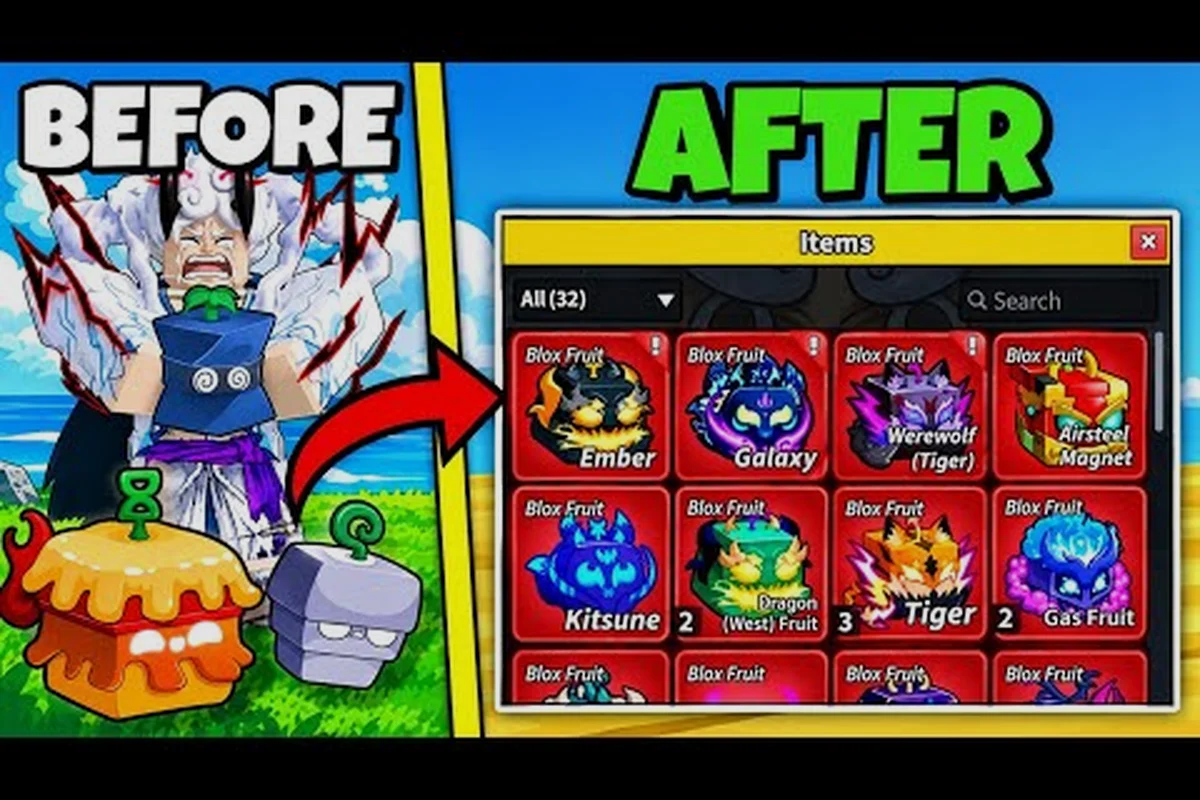
A strong Blox Fruits inventory guide helps prevent valuable gear from being lost, misplaced, or wasted in storage. Learn which accessories to keep, how to organize Storage and Safe Chest items, and when a Fruit’s mastery justifies upgrading it—for example, comparing stored fruit stats with the potential gains from using another Blox Fruit or upgrading your Sea Events keys.
What Makes a Blox Fruits Inventory Guide Useful?
Blox Fruits inventory space is valuable because one account can accumulate several fruits, weapon types, accessories, materials, and upgrade items. A clean inventory reduces clutter, protects important gear, and makes it easier to switch builds without leaving a long list of forgotten items behind.
The best setup is not simply “keep everything.” It is a deliberate system that separates combat-ready gear, progression materials, rare collectibles, and items you can safely trade or discard. That distinction matters because some objects are easy to replace, while others may represent a difficult boss drop or a permanent fruit you do not want to lose.
A useful Blox Fruits inventory guide should go beyond listing categories: it should explain how fruit mastery, weapon stats, accessory slots, and storage limits affect real build decisions. For example, keeping a permanent fruit for future mastery can outweigh trading a duplicate, while a low-level weapon may be worth storing if it completes a mastery requirement. Organizing materials by their next upgrade can also prevent valuable fruit seeds and boss drops from being accidentally sold.
| Inventory group | Common contents | Recommended action |
|---|---|---|
| Active gear | Main weapon, backup weapon, equipped accessories | Keep equipped and immediately usable |
| Progression items | Fruit seeds, upgrade materials, boss drops | Store by purpose and upgrade priority |
| Permanent valuables | Permanent or rare fruits | Protect carefully and trade cautiously |
| Temporary gear | Duplicate weapons, low-level accessories, excess materials | Sell, trade, or use as upgrade fodder |
| Collectibles | Special fruits, rings, caps, quest items | Keep only when needed for goals or trade value |
A Simple Inventory Checklist
Before moving items, open your inventory and identify the active build, backup build, upgrade reserve, and trade reserve. Assign each Blox Fruit or weapon to a purpose instead of leaving everything in one pile—for example, keep your best damage-focused sword in the active build, a second weapon for enemies that resist it, and materials needed for future mastery in the upgrade reserve. This grouping makes it easier to swap gear for different fights while preserving rare fruits and upgrade-ready items for later use.
-
Keep the weapon you use most often in your active equipment.
-
Keep one practical backup for situations where your main weapon is ineffective.
-
Equip accessories according to the stats or effects you actually need.
-
Store upgrade materials separately from weapons that cannot use them.
-
Keep rare fruits in a protected section or separate account whenever possible.
-
Move duplicates into a trading area only after checking their value.
A beginner who has not yet learned the basic combat loop can use the Blox Fruits beginner guide to identify which weapons and accessories are appropriate before spending inventory space on them. For example, compare a weapon’s damage and attack speed against the enemy’s element, then check whether an accessory’s stat boost fits the same build; a Blox Fruit should also be matched to the role it supports rather than stored simply because it is rare. This prevents low-level gear from crowding out a useful active loadout and leaves room for mastery materials and backup equipment.
How to Store Blox Fruits Items Without Losing Valuable Gear
Storage decisions should be based on three questions: Can I use this item now, does it support a future upgrade, and is it valuable enough to protect separately? A reliable Blox Fruits inventory setup answers those questions consistently rather than relying on memory during a rare drop.
Players report that mastery belongs to each item, not to the account as a whole. Therefore, a sword you never use may remain at low mastery even when your character has advanced significantly. Community walkthroughs such as this 2026 inventory video emphasize carrying one main weapon and one backup instead of five unused options.
Storage by Progression Value
Start with the most valuable items, then work backward. Rare fruits and highly desired accessories should never share an easy-to-sell pile with common materials. Weapons should be divided into those actively used, those being upgraded, and those whose continued storage no longer serves a clear goal.
| Storage tier | Example items | Where attention should go |
|---|---|---|
| Critical | Permanent fruits, best trade accessories | Highest protection, minimal trading |
| High | Current and backup weapons, rare boss drops | Clearly labeled active collection |
| Medium | Upgrade materials, fruit seeds, crafting parts | Group by exact use |
| Low | Common duplicates, obsolete gear, excess supplies | Sell, trade, or convert |
This tier system is also useful when a new drop arrives. You can compare it with your lowest-value item instead of assuming every new object deserves permanent space. It also makes accidental trades less likely because high-value objects are already isolated from disposable items.
The Five-Minute Cleanup Routine
A short cleanup after each major boss session can prevent clutter from becoming a problem. First, equip your main weapon and best accessory set. Next, move upgrade materials into labeled groups. Third, identify duplicates and decide whether to sell or trade them. Fourth, check whether any low-level item still contributes useful mastery or a needed effect. Finally, reserve a small amount of space for the next rare drop.
Do not rush this process if you are trading. Compare the item’s level, stats, mastery, type, and demand before exchanging it. One polished duplicate can be worth more than several unmastered items, so the visual upgrade alone is not always a reliable measure of value.
Protecting Permanent Fruits
Permanent fruits need a different level of caution from ordinary materials. Keep the fruit in a separate section whenever the game allows it, avoid unnecessary trades, and maintain a record of the fruit’s exact name and status. If a trading platform offers duplicate protection or a confirmation step, use it.
Fruit storage also benefits from a simple written inventory list. Include the fruit name, whether it is permanent, and the last date you verified it. This small habit helps you notice missing or traded items early and reduces the chance of treating a valuable fruit as a spare resource. For broader fruit management, the fruit storage and notifier guide covers notification habits that can complement your in-game organization.
Weapons, Accessories, and Mastery: Blox Fruits Inventory Guide Decisions
The inventory becomes manageable when each item has a clear role. Your main weapon handles common encounters, a backup covers a weakness or different play style, and accessories support the stats or effects you want. Mastery then determines whether using a weapon regularly produces enough value to justify its slot.
This Blox Fruits inventory guide recommends carrying one main weapon and one dependable backup. More options can be fun to collect, but unused weapons provide little practical benefit and make valuable drops harder to evaluate. A compact loadout also reduces the mental effort of switching gear during a boss fight.
Weapon Slot Review
A good weapon for your account is not always the strongest weapon available. It should match your level, fight against the enemies you face, and offer an effect you can use. Compare a weapon’s role before deciding whether it should replace an older option.
| Weapon consideration | Main weapon | Backup weapon |
|---|---|---|
| Preferred target | Your most common enemies | A weakness or different enemy type |
| Mastery | Already developed through regular use | Developing, but worth retaining |
| Combat style | Matches your normal controls and timing | Offers a practical alternative |
| Upgrade status | Supports your current progression goal | Prepared for future use |
| Inventory value | Too valuable or useful to replace casually | Replaceable if a clearly better option appears |
Community guidance also recommends considering acquisition difficulty. A slightly weaker but fully mastered weapon can outperform an untested high-tier drop in actual encounters. That is especially true when the drop has a different style, range, or enemy interaction that you have not learned yet.
What Mastery Changes—and What It Does Not
Understanding what mastery is matters before you sell a familiar item. Mastery is tracked on the individual weapon or item through use. It improves that item’s effectiveness as you continue using it, but it does not automatically transfer to another weapon simply because your account or character level is high.
| Mastery principle | Practical result |
|---|---|
| Tracked per item | A new weapon begins without the old weapon’s practice |
| Built through use | Repeatedly using one item develops its mastery |
| Not account-wide | High character level does not master every owned item |
| Can favor specialization | One heavily used weapon may outperform several alternatives |
The Blox Fruits mastery guide explains how gains relate to practice and stat development. For inventory decisions, the practical rule is simple: keep a low-level item only if you use it, value its effect, or have a reason to believe future mastery will improve its role.
When to Keep a Duplicate
Keep a duplicate when it provides a meaningful upgrade path, carries different stats, or has a much higher mastery level. An exact visual copy at the same level and mastery usually adds little unless you plan to trade it or use one for an upgrade.
Before keeping duplicates, check whether the older item has been mastered. You can also compare other weapon families through the gun mastery and weapon collection guide, which is useful when deciding whether a new gun belongs in your active loadout.
Accessories in the Blox Fruits Inventory
Accessories are the easiest inventory category to undervalue because their effects are passive and may not be obvious from a quick glance. They can raise stats while equipped, support different builds, or simply improve a setup that already works. An accessory slot should therefore be chosen by need rather than by appearance alone.
Understanding how to use accessories in Blox Fruits starts with the fact that they equip directly and provide passive benefits. Bosses can drop accessories, but rarity alone does not make every drop worth keeping. Compare its effect with the accessories already in use and ask whether the new item improves a stat that matters to your current fighting style.
Accessory Priority Checklist
Use this Blox Fruits accessory guide when a new drop arrives: identify whether it is a ring, necklace, bracelet, or earring, then place it in the inventory category where you can compare its stats and set bonuses. For example, if a new ring improves Energy but reduces Damage, compare it against your current ring before equipping it; a small stat increase is not automatically an upgrade. This approach prevents duplicate accessories from taking up valuable inventory space while keeping options for future builds.
-
Confirm the accessory’s exact stat or effect.
-
Compare it with the weakest equipped accessory, not the strongest possible one.
-
Decide whether the effect improves damage, defense, energy, speed, or another needed stat.
-
Check whether the new accessory creates a useful set bonus or build synergy.
-
Keep it as a swap option only when it has a clear future purpose.
-
Sell or trade it if it merely duplicates a better equipped item.
| Accessory decision | Keep | Store temporarily | Sell or trade |
|---|---|---|---|
| Effect | Improves a needed stat or unique role | Could fit a future build | No useful effect for your plans |
| Duplication | Better stats than equipped copy | Different stats worth comparing | Exact duplicate of a better item |
| Acquisition | Difficult boss drop | Moderate rarity | Common and easily replaced |
| Build value | Completes a synergy | May become useful after another upgrade | Conflicts with your preferred setup |
Accessory Sets Versus Single Stats
A set bonus can be more valuable than a large individual stat, especially when the pieces work together. Compare the total equipped effect instead of judging one accessory in isolation. If the complete set provides a meaningful improvement, its individual pieces may deserve priority even when a universal accessory offers a slightly larger number.
Community inventory videos, including this Blox Fruits inventory update walkthrough, note that accessories occupy limited space while contributing passive bonuses. The practical takeaway is to equip a coherent set, keep one experimental option, and avoid filling every slot with gear whose effects you do not understand.
Accessory Maintenance Schedule
Review accessories after major stat milestones, new world access, or a significant boss victory. Equipment that was weak earlier may become useful when your level changes, while accessories you once equipped may be surpassed by better drops. A scheduled review also prevents the inventory from becoming a permanent archive of outdated choices.
When comparing effects, write down the current total stats first. Then add the candidate accessory temporarily and check the difference. This approach is faster and less error-prone than memorizing every numerical value, especially when a set bonus changes the final total.
Selling, Trading, and Upgrading With a Blox Fruits Inventory
Selling and trading free space, but they can also turn a useful item into a mistake. The safest approach is to classify items before acting: active gear stays equipped, progression gear remains stored, rare valuables receive extra protection, and duplicates enter the trade pool only after verification.
An upgrade should solve a clear progression goal. If a weapon is already effective for your current level, a random upgrade may be less valuable than saving materials for a future boss tier. Likewise, trading a fruit for a weapon should reflect a deliberate change in play style rather than an attempt to solve a temporary difficulty spike.
Pre-Trade Verification
Before confirming a trade, verify the item name, level, mastery, durability, stats, and any visible condition. Compare the offered value with what your inventory can comfortably replace. A good trade improves your long-term options; it does not merely add another object to an already crowded inventory.
| Action | Check first | Common mistake |
|---|---|---|
| Sell | Sell price and upgrade value | Selling the only source of a future stat |
| Trade | Both inventories, item condition, rarity | Ignoring mastery or exact item differences |
| Upgrade | Target weapon and material requirement | Spreading rare materials too thin |
| Equip | Stats, set effect, enemy coverage | Filling slots with unused bonuses |
| Store | Item category and future purpose | Mixing valuable gear with disposable stock |
Upgrade Priorities
One upgrade target is usually easier to manage than several half-finished projects. Choose the weapon you use most, confirm that the required materials are available, and keep the rest of the reserve intact. If you switch targets, move the materials with the project so a valuable upgrade does not remain scattered.
| Upgrade route | Best when | Inventory benefit |
|---|---|---|
| Current main weapon | It supports your regular fights | Produces immediate progress |
| Seasoned backup | Its mastery gives high value | Builds a dependable alternative |
| Future-tier weapon | Materials are already secured | Reserves progress for later |
| Random material test | You have abundant duplicates | Uses surplus without risking reserves |
When to Keep the Inventory Lean
A lean inventory is useful before storage reaches its limit, but there is no need to strip it to the bone. Keep enough materials for the next planned upgrade, one backup weapon, and any collectible needed for a future goal. The remaining space serves as a buffer for rare boss drops and unexpected events.
Three complete sets is a useful starting point for weapons: the active set, the backup set, and the future project. This is a practical community-supported planning rule rather than a hard game limit. Adjust it when your play style, available space, and collection goals demand a different arrangement.
Building a Blox Fruits Inventory System That Stays Organized
A strong inventory system should be simple enough to maintain after a difficult fight. Use consistent categories, keep your active gear obvious, and avoid relying on item names alone. The goal is not perfect labeling; it is being able to identify keepers, upgrades, and trade fodder within seconds.
Start with a fresh audit. Equip the strongest practical weapons, compare every accessory, and gather all duplicate drops into one area. Then label the remaining groups mentally as Active Loadout, Upgrade Projects, Permanent Valuables, and Trade Pool. This simple framework turns a chaotic inventory into a decision-making system.
A Complete Inventory Maintenance Checklist
-
Equip one main weapon and one backup weapon.
-
Replace only accessories that improve a needed stat or build effect.
-
Keep upgrade materials grouped by their intended weapon.
-
Store permanent fruits separately from trade materials.
-
Sell common duplicates before they consume scarce space.
-
Compare mastery before discarding a familiar low-level item.
-
Keep enough room for rare boss drops.
-
Record valuable trades outside the game.
-
Review the inventory after each major update.
-
Test a new loadout in a practical enemy encounter.
Common Inventory Mistakes
The most common mistake is treating every acquisition as permanent. Another is keeping too many nearly identical weapons, which makes upgrades difficult to plan. Players also underestimate accessories, keeping them equipped without checking their actual contribution, or selling a familiar item before considering the mastery already invested in it.
A second common error is trading during a farming session without checking what changed. Items can disappear between menus, and the visible list may be easier to misread during a rush. Slow down for permanent fruits, high-level accessories, and rare weapons. For everything else, compare the exchange against your current storage rule.
A Fast Decision Formula
Ask three questions in order. First, do I use this item? If yes, keep or equip it. If no, ask whether it supports a planned upgrade. If it does, store it. If it does not, decide whether selling or trading produces more value than keeping it as a possible backup.
This process prevents emotional decisions based on a new item’s appearance. It also reduces duplicate accumulation, because every item must pass a functional test. The system remains useful even when your preferred build changes, since the same questions apply to future drops.
Inventory Guide Summary for Long-Term Progression
The central lesson of this Blox Fruits inventory guide is that item value depends on use, progression, and rarity together. Keep one strong main weapon, one purposeful backup, a coherent accessory setup, and a protected reserve of permanent valuables. Mastery changes the equation because an item becomes stronger through use rather than account-wide status.
Storage works best when every category has a clear purpose. Rare drops should not disappear into common materials, accessories should earn their slots, and upgrades should concentrate on a specific project. Regular cleanup protects that system, especially before a boss run, storage limit, or trade.
Treat the inventory as an active build plan rather than a museum of possible gear. For example, keep a mastered Fruit like Blox Fruit or a max-level weapon for reliable boss damage, but move an underperforming Fruit to the stash or sell it when a stronger drop arrives. Apply the same test to accessories: retain only those that support your chosen build, such as a buff-focused accessory set for grinding or a stat-oriented set for combat. This keeps inventory space available for rare drops, preserves hard-to-replace items, and makes every new drop easier to evaluate by comparing its stats, mastery progress, and role with your current setup.
Frequently Asked Questions
What should I keep in my Blox Fruits inventory?
Keep your main weapon, one useful backup, equipped or upgrade-ready accessories, materials for a planned upgrade, and any rare or permanent items you need. A practical Blox Fruits inventory guide also recommends moving duplicates into a separate trade pool so valuable drops do not disappear among common supplies.
Is there enough room for every weapon I collect?
Not necessarily. Inventory space is limited, and carrying several items you never use can hide more valuable drops. Keep a compact combat loadout and store the rest in clearly separated groups. A Blox Fruits inventory system works best when every retained weapon has a current use or a specific future purpose.
How do I decide whether an accessory is worth keeping?
Compare its exact effect with your weakest equipped accessory, then check whether the bonus improves the stats or enemy matchup you rely on. Keep it if it creates a meaningful improvement, set bonus, or useful future build. Sell or trade it when it duplicates a stronger item without adding a distinct advantage.
Does character level make mastery apply to every item?
No. Mastery is tracked on each item, so a weapon you rarely use does not inherit the mastery of your main weapon. This Blox Fruits what is mastery distinction matters when comparing drops: account level alone cannot show how developed an individual weapon actually is, because regular use determines its progress.
Should I trade a permanent fruit for a stronger weapon?
Usually not without a clear reason. Permanent fruits are difficult to replace and may be more valuable than the immediate upgrade they unlock. Consider trading only when the new weapon solves a long-term problem and you have verified the exact fruit, offer, mastery, and item conditions before confirming the exchange.